SEPHIENCE was studied in APHENITY, a two-part clinical trial of people aged 1-61 years old living with PKU. During Part 1 of the trial, 156 participants received their age- and weight-specific dosage. In Part 2 of the trial, 98 people with PKU aged 2 years and older were included. They had responded to SEPHIENCE in Part 1 and were randomly assigned to receive either SEPHIENCE or placebo for 6 weeks.
After 6 weeks, people treated with SEPHIENCE had a greater reduction in blood Phe levels than those on placebo
SEPHIENCE helped lower blood Phe levels for many people after 2 weeks.
Most people saw substantial reductions in blood Phe levels
73% achieved at least a 15% reduction
66% achieved at least a 30% reduction
SEPHIENCE led to a significant reduction in blood Phe levels compared to placebo after 6 weeks.
Average blood Phe levels dropped by
63%
Individual results may vary.
Additional Information on How SEPHIENCE Works
The information below shares extra insights from the SEPHIENCE clinical study. These results were not part of the original study plan and are not included in the official Prescribing Information approved by the FDA. PTC Therapeutics provides these results to help you better understand the treatment. Talk to your healthcare provider if you have any questions, and always refer to the full Prescribing Information for details about using SEPHIENCE.
Results across different types of PKU
As part of the APHENITY study, SEPHIENCE was studied in people with different types of PKU, including those with classical PKU—defined by blood Phe levels at or greater than 1200 μmol/L (20 mg/dL) at birth or historically, even if current levels are lower—and those who didn’t respond to BH4 treatment in the past. In both groups, SEPHIENCE significantly lowered blood Phe levels, demonstrating effectiveness across a wide range of people with PKU.
Among those who experienced a reduction in blood Phe levels:
For people with classical PKU
(n=6)
Average blood Phe levels were reduced by
69%
on SEPHIENCE
For people not helped by BH4 treatment in the past
(n=13)
Average blood Phe levels were reduced by
57%
on SEPHIENCE
Guideline levels reached
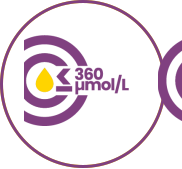
SEPHIENCE was studied to see how well it helps people with PKU reach blood Phe level targets recommended by experts. These targets, set by the American College of Medical Genetics and Genomics, recommend maintaining a blood Phe level at or below 360 µmol/L (6 mg/dL).
More than 4 out of 5 people taking SEPHIENCE reached expert-recommended target blood Phe levels.
More than 4 out of 5 people taking SEPHIENCE reached expert-recommended target blood Phe levels.
84% with SEPHIENCE vs 9% with placebo reached less than or equal to 360 µmol/L
“
For me lowering my blood Phe means less limits and more possibilities.
Objective: To evaluate the effectiveness and safety of SEPHIENCE in lowering blood Phe levels in a broad population of people with PKU, including children, adults, those with classic PKU, those not responding to BH4 and individuals taking sapropterin at the start of the study.
Method: APHENITY was a Phase 3, randomized, double-blind, placebo-controlled study conducted at 34 sites across 13 countries. The study enrolled 157 participants aged 1 year or older with elevated blood Phe; 156 were assessed for responsiveness, as one participant withdrew. In Part 1, all participants received SEPHIENCE for 14 days to assess their response. Those who showed at least a 15% reduction in blood Phe levels moved on to Part 2, where they were randomized to receive either SEPHIENCE or placebo for 6 weeks. The SEPHIENCE group received a once-daily oral powder in escalating doses (20, 40, and 60 mg/kg/day). Phe levels were monitored regularly throughout the study.
Results: SEPHIENCE demonstrated a 63% average reduction in blood Phe over 6 weeks, compared with just 1% for placebo. Many participants saw improvement within the first week. By Week 6, 84% of people taking SEPHIENCE reached the U.S. treatment target of at or below 360 μmol/L. Additionally, 22% of participants achieved Phe levels within the healthy range (35–120 μmol/L), while none in the placebo group did. Results were consistent across age groups, types of PKU, and prior treatment histories. SEPHIENCE was generally well tolerated. The most common side effects were mild gastrointestinal symptoms (such as diarrhea), and headache. No serious or severe adverse events were reported, and no participants discontinued treatment due to side effects.
PLEASE NOTE: Individual results may vary. This study is not in the approved Prescribing Information for SEPHIENCE, but it is consistent with the information included. Please talk to your healthcare provider if you have any questions.
Most common side effects:
Diarrhea (7%)
Headache (7%)
Stomach pain (5%)
Throat pain (4%)
Low levels of Phe in the blood—below the healthy range of 35–120 µmol/L (0.6–2 mg/dL)—also called HypoPhe (4%)
Unusual-colored feces (4%)
These are not all the possible side effects of SEPHIENCE. If you experience any side effects,
tell your healthcare provider.
Stay Informed
Sign up to receive updates, insights, and resources straight to your inbox.
You are now leaving the SEPHIENCE website and will enter a website operated by an independent third party. The links to third-party websites contained on this website are provided solely for your convenience. PTC Therapeutics does not control the opinions, claims, or comments on any third-party website linked to this website; the policies and practices of those third parties will govern your activities at those websites.